
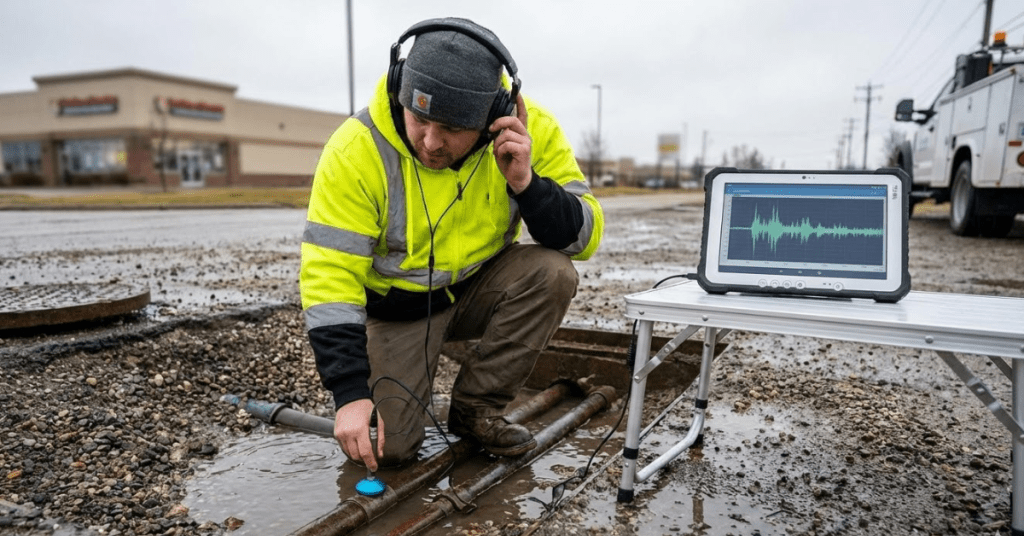
A hidden water leak in a commercial building can go unnoticed for weeks, sometimes months, silently driving up utility bills and eating away at the structure from the inside out. By the time you spot the damp patch on a ceiling tile or notice a musty smell in the corridor, the damage is already well underway.
For Perth business owners and property managers, professional leak detection Perth services are more than a convenience. They are an essential part of protecting your investment. Acoustic water leak detection has become the gold standard for pinpointing hidden leaks in commercial properties, allowing licensed plumbers to locate the exact source without ripping up floors or tearing open walls.
In this guide, Alkimos Plumbing and Gas breaks down how acoustic leak detection works, what makes commercial buildings particularly vulnerable and when it is time to call in a professional rather than trying to sort it out yourself.
Why Hidden Leaks Are a Bigger Problem Than You Think
Water leaks in commercial buildings are not always the dramatic burst pipe flooding the ground floor. More often, they are slow, concealed drips tucked behind walls, beneath concrete slabs or running through ceiling cavities. These hidden leaks account for a staggering amount of wasted water across the Perth metro area.
According to a Western Australian Auditor General report on Water Corporation’s pipe management, approximately 30 billion litres of water went unbilled in metropolitan Perth in a single year, a figure that includes losses from leaks, bursts and other factors. That is well above Water Corporation’s target and highlights just how widespread the issue really is.
For commercial property owners, the consequences go beyond water waste:
- Structural damage. Persistent moisture weakens foundations, corrodes reinforcing steel and promotes mould growth in wall cavities.
- Inflated water bills. Even a modest leak can add hundreds of dollars per quarter to a commercial water account, and larger leaks can push bills into the thousands.
- Business disruption. Undetected leaks eventually force emergency shutdowns, affecting tenants, customers and operations.
- Compliance risks. Under WA plumbing regulations, property owners have a responsibility to maintain internal plumbing infrastructure to the required standards.
Perth’s sandy, limestone-heavy soils can also mask the visible signs of underground leaks, allowing water to drain away beneath the surface without any obvious pooling or wet patches at ground level. This makes professional detection even more critical in our local conditions.
What Is Acoustic Water Leak Detection?
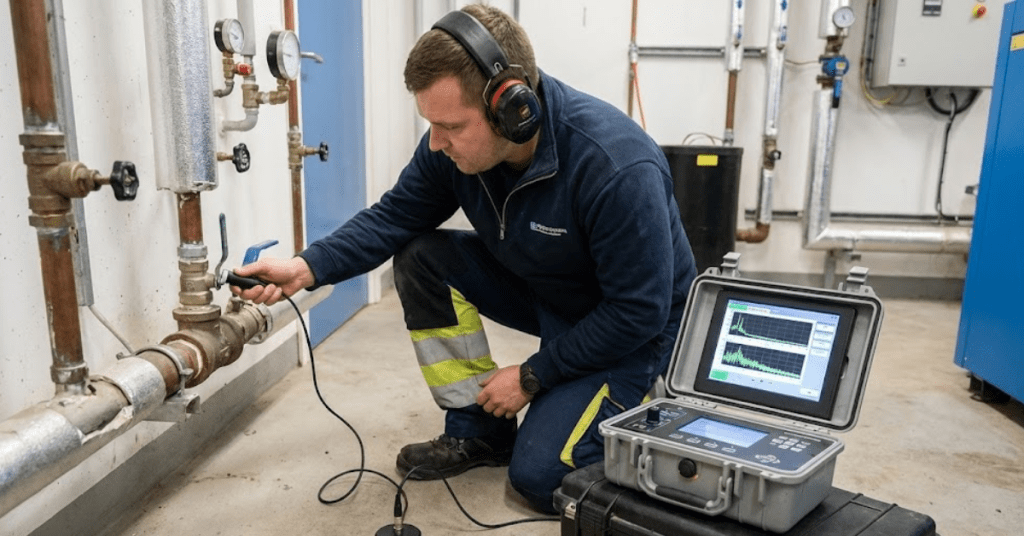
Acoustic leak detection is a non-invasive method that uses highly sensitive listening equipment to identify the sound of water escaping from pressurised pipes. When water forces its way through a crack, joint failure or pinhole in a pipe, it creates a distinctive noise, a hiss, a whoosh or a low rumble, depending on the pipe material, water pressure and size of the breach.
Trained technicians use a combination of ground microphones, acoustic sensors and electronic amplification equipment to pick up these sounds through concrete, soil, tiles and other building materials. The technology has become remarkably precise, allowing experienced plumbers to narrow down a leak’s location to within centimetres, all without digging a single trench or removing a floor tile.
This approach is particularly well suited to water leak detection in Perth commercial jobs because it minimises disruption to daily operations. Unlike traditional methods that rely on exploratory excavation, acoustic detection means the plumber only needs to open up the specific area where the leak is confirmed.
How Acoustic Leak Detection Works in Commercial Buildings
If you have never seen the process in action, here is a step-by-step look at what typically happens when a licensed plumber carries out acoustic leak detection on a commercial property.
Step 1: Initial assessment and pressure testing
The plumber starts by reviewing the property’s plumbing layout, checking metre readings and running a static pressure test. If the water metre continues to tick over when all taps and fixtures are shut off, that is a strong indicator of a leak somewhere in the system.
Step 2: Acoustic scanning
Using ground microphones and contact sensors, the technician systematically works across the building, listening for the telltale sounds of escaping water. In larger commercial properties, this may involve scanning across multiple floors, plant rooms, amenities blocks and external supply lines.
Step 3: Signal analysis and pinpointing
Modern acoustic equipment includes digital signal processors that filter out background noise from traffic, HVAC systems and foot traffic. This allows the plumber to isolate the specific frequency of the leak and narrow down the precise location.
Step 4: Correlation testing (for larger sites)
On bigger commercial properties with long pipe runs, correlators may be used. These devices are placed at two access points on the same pipe and use the time difference in the sound reaching each sensor to calculate the exact position of the leak between them.
Step 5: Confirmation and repair planning
Once the leak is pinpointed, the plumber marks the location and discusses the most efficient repair approach with the property owner or facility manager. In many cases, only a small section of flooring or wall lining needs to be removed, saving significant time and repair costs compared to guesswork-based excavation.
If you are managing a commercial property and want to avoid the kind of costly mistakes that come from skipping proper detection, our guide on common mistakes in commercial plumbing projects covers the pitfalls to watch out for.
Common Signs Your Commercial Building Has a Hidden Leak
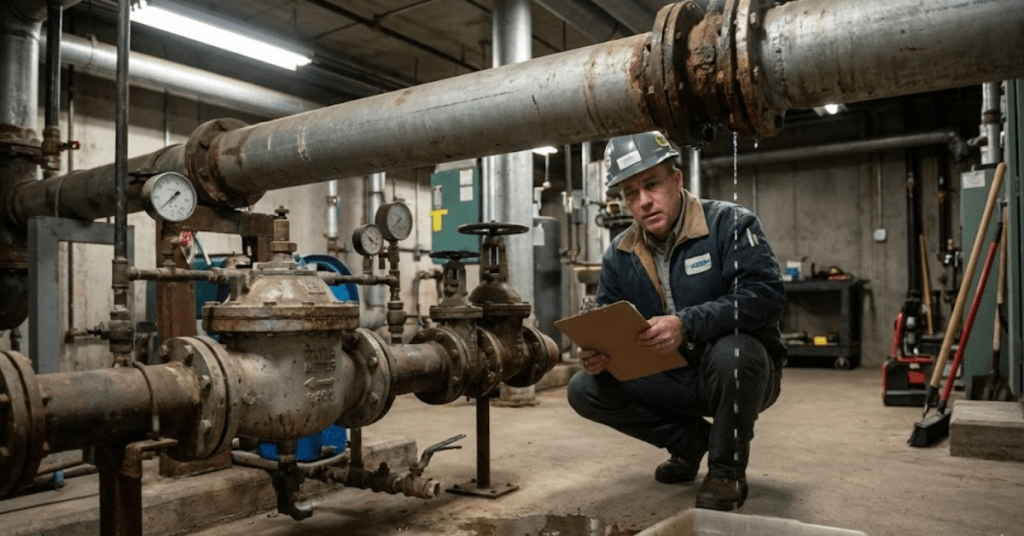
Not every leak announces itself with a puddle on the floor. In commercial settings, the warning signs are often subtle and easy to overlook, especially in buildings with multiple tenants or large floor areas. Here is what to keep an eye out for:
- Unexplained spikes in water bills: If your water costs have jumped without any obvious change in usage, a hidden leak is a likely culprit.
- Damp or discoloured patches: Staining on walls, ceilings or floors, particularly in areas near bathrooms, kitchens or plant rooms.
- Musty or mouldy smells: Persistent dampness in wall cavities or under flooring creates the perfect environment for mould growth, which you will often smell before you see.
- Reduced water pressure: A noticeable drop in pressure across the building may indicate water is escaping the system before it reaches the fixtures.
- The metre test: Turn off every water-using fixture and appliance in the building. If the water metre is still ticking over, you have a leak.
- Cracking in external paving or landscape settlement: Underground leaks can wash away soil beneath paved areas, causing uneven surfaces or subsidence in car parks and walkways.
Perth’s climate makes some of these signs trickier to spot. Hot, dry summers can mask external leaks because water evaporates quickly at the surface, while our sandy soils allow water to disperse underground without forming visible wet patches.
Why Perth Commercial Buildings Are Especially Vulnerable
Perth’s unique combination of climate, soil conditions and building stock creates a perfect storm for hidden leaks in commercial properties.
- Ageing infrastructure: Many commercial buildings across suburbs like Osborne Park, Malaga and Welshpool were built in the 1970s and 1980s. The original copper and galvanised steel pipes in these properties are reaching the end of their lifespan and are increasingly prone to pinhole leaks and joint failures.
- Reactive soils and ground movement: While Perth is known for its sandy soils, pockets of reactive clay exist throughout the metro area. Seasonal ground movement caused by the wet-dry cycle can shift pipes, stress joints and cause fractures over time.
- High water pressure. Some Perth suburbs experience higher-than-average mains water pressure, which places extra stress on internal plumbing systems. Over time, this accelerates wear on fittings, valves and pipe connections.
- Complex plumbing layouts. Commercial buildings often have extensive pipe networks running through walls, ceiling spaces, under slabs and across multiple storeys. This complexity makes visual leak detection virtually impossible and is exactly why acoustic technology is so valuable.
It is also worth noting that Water Corporation offers a leak allowance for eligible properties. If you have had a hidden leak repaired by a licensed plumber, you may be able to claim up to 50% of the estimated water lost back on your account. The leak must be hidden (not a dripping tap) and the repair must be completed within 60 days of detection.
When to DIY vs. When to Call a Professional
There are a few basic checks any property manager or business owner can do themselves before picking up the phone:
- Run the metre test: Shut off all water-using fixtures and check whether the metre is still moving. This takes five minutes and costs nothing.
- Check visible fixtures. Inspect taps, toilet cisterns, urinals, hot water systems and any exposed pipework for obvious drips or signs of moisture.
- Monitor your bills. Keep an eye on quarterly water usage. A sudden jump without a corresponding change in operations is a red flag.
However, once you have ruled out visible issues and suspect a concealed leak, it is time to call a licensed plumber with acoustic detection equipment. Trying to locate a hidden leak yourself, especially in a commercial building, usually leads to unnecessary damage and higher repair costs.
Under Western Australian regulations administered by the Plumbers Licensing Board, all plumbing work beyond basic maintenance must be carried out by a licensed professional. That includes any repair that involves opening walls or floors or accessing main supply lines.
For a deeper look at what you can handle on your own versus what needs a professional, have a read of our guide on water leak detection: DIY or call a plumber.
Frequently Asked Questions
How much does acoustic leak detection cost in Perth?
Costs vary depending on the size and complexity of the property. For a standard commercial leak detection inspection, you can generally expect to pay between $300 and $600. Larger multi-storey buildings or sites with extensive pipe networks may cost more, but this is almost always cheaper than the alternative of exploratory demolition to find the leak by trial and error.
Can acoustic detection find every type of leak?
Acoustic detection works best on pressurised water supply lines where escaping water creates a detectable sound. It is less effective for very slow seepage or drainage leaks where there is no pressure behind the water. In those cases, your plumber may use thermal imaging or tracer gas testing as a complementary method.
How long does a commercial leak detection inspection take?
A typical inspection on a small to medium commercial property takes between one and three hours. Larger buildings, particularly those with multiple levels or complex layouts, may take a full day. The process is non-invasive, so your business can usually continue operating while the inspection is underway.
Will I need to shut off the water supply during the inspection?
Partially. The plumber will need the water supply on during the acoustic scanning phase because the leak needs to be active to create a detectable sound. However, they may ask you to switch off specific fixtures or zones at certain points to isolate the noise and narrow down the location.
Is acoustic leak detection safe for older buildings?
Absolutely. One of the biggest advantages of acoustic detection is that it is completely non-destructive. There is no drilling, digging or removal of building materials during the detection phase. This makes it ideal for older Perth commercial buildings where you want to avoid disturbing heritage features or ageing structural elements.
What happens after the leak is found?
Once the plumber has confirmed the leak’s location, they will discuss repair options with you. Depending on the severity and location, this might range from a straightforward pipe repair to a section replacement. A licensed plumber will provide a clear quote before starting any repair work.
Am I eligible for a Water Corporation leak allowance?
You may be. Water Corporation offers a leak allowance that covers up to 50% of the estimated water lost due to a hidden leak. To qualify, the leak must be concealed (not a visible drip), repaired by a licensed plumber and the application lodged within six months of the repair. Visit the Water Corporation leak allowance page for full eligibility details.
Protect Your Property with Professional Leak Detection Perth
Hidden water leaks are one of those problems that only get worse the longer they go unaddressed. For Perth commercial property owners, investing in professional leak detection Perth services is one of the smartest moves you can make to protect your building, reduce unnecessary water costs and avoid disruptive emergency repairs down the track.
Acoustic water leak detection gives you a fast, accurate and non-invasive way to find the problem before it becomes a crisis. And with potential savings through Water Corporation’s leak allowance, the cost of getting a professional in is often offset by what you save on your water bill.
Alkimos Plumbing and Gas provides expert plumbing services. Perth business owners and property managers rely on. If you suspect a leak or simply want peace of mind, give us a call on (08) 6118 6107 for a professional assessment. We will find it, fix it and get your building back on track.