
There’s never a good time to discover you have no hot water. You turn on the shower before work and it runs icy cold, or you’re halfway through the dishes when the tap turns lukewarm. It’s frustrating, and in the middle of a Perth winter it can feel like a small emergency.
The good news is that a lack of hot water doesn’t always mean a big repair bill. Sometimes the fix takes a few minutes and you can sort it yourself; other times it’s a sign that something needs a licensed professional.
At Alkimos Plumbing and Gas, we help Perth households and businesses get their hot water back every week. This guide covers what to check first, what’s safe to do yourself, when to call, and a few Perth-specific reasons your system might be struggling.
Why hot water problems are so common in Perth
A hot water system is one of the hardest-working appliances in your home. It works every day without a second thought until it stops, which is why a fault tends to arrive at the worst possible moment.
Perth homes also face local challenges. Our long, hot summers push demand up as everyone showers and washes more, while winter cold snaps make any cold shower genuinely unpleasant. On top of that, much of Perth, especially the northern suburbs, runs on groundwater with a high mineral content, and this hard water slowly builds up inside tanks and on heating elements.
Add the age of the system into the mix and hot water faults become almost inevitable. Most storage systems last around 8 to 12 years, so if yours is older than that, a failure is less bad luck and more a matter of timing.
First things to check when you have no hot water
Before you call anyone, run through a few quick checks. You’d be surprised how often the problem is something simple.
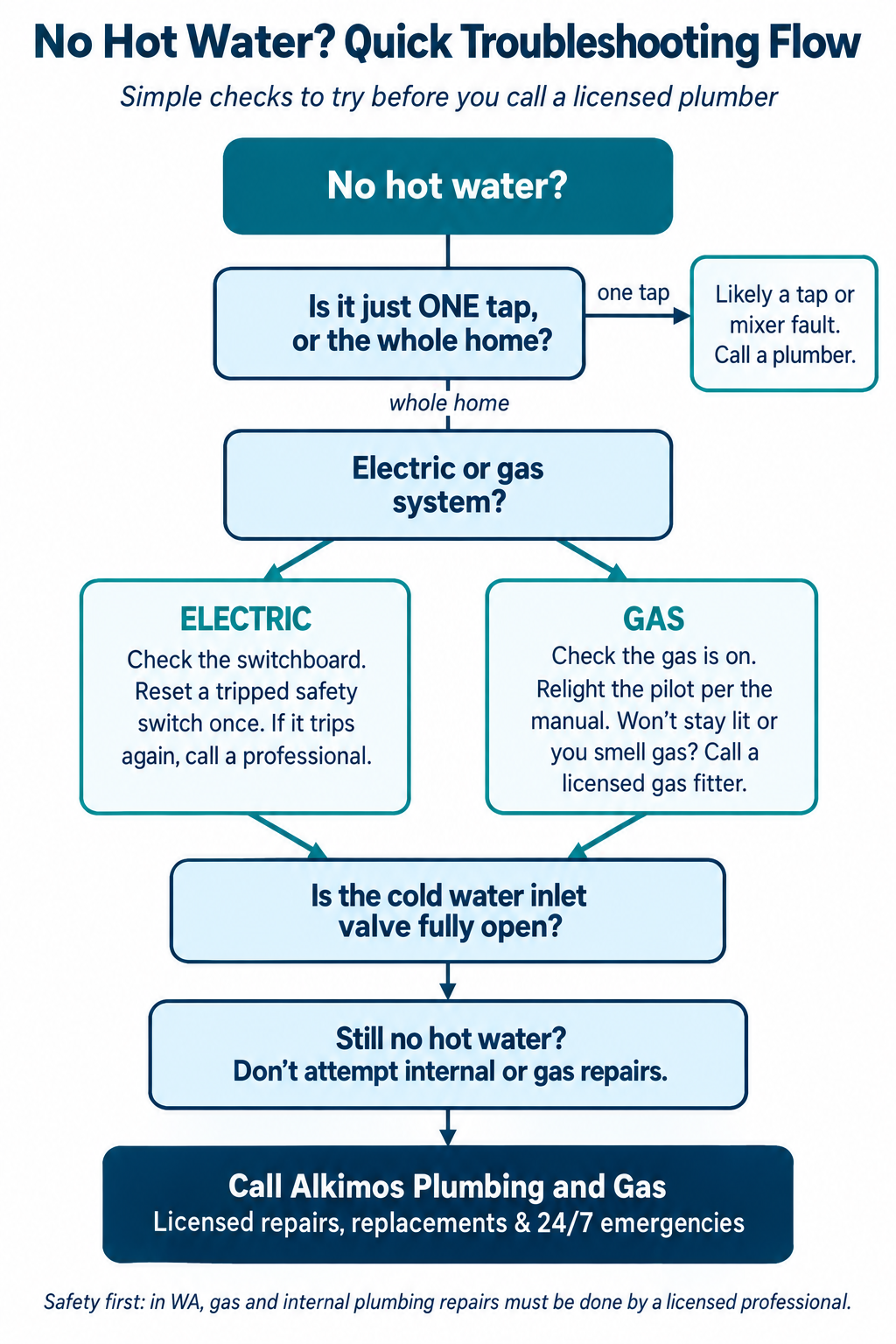
Start by working out how widespread the issue is:
- Is there no hot water anywhere, or just at one tap? A single cold tap often points to a tap or mixer fault, not the whole system.
- Is the water fully cold, or just not as hot as usual? Lukewarm water usually means the system is partly working.
- Has anything changed recently? A power outage, a big storm, or a tripped safety switch can all knock a system offline.
For an electric system, check your switchboard. A tripped circuit breaker or safety switch is one of the most common causes, and flicking it back on may be all you need. If it trips again straight away, stop and call a licensed professional, because that points to a deeper fault.
For a gas system, check that the gas supply is on and that other gas appliances still work. Many gas units have a pilot light or ignition that can go out after a storm or a gas interruption. Your owner’s manual will show you how to relight it safely.
For any system, check that the cold water inlet valve is fully open, as it can be left partly closed after nearby work. These simple checks solve a good share of no hot water calls before a plumber is ever needed.
Why your hot water is not working: common causes by system type
If the basics check out and your hot water is still not working, the cause usually depends on your system type. Perth homes typically run one of four: electric storage, gas storage, gas continuous flow (also called instantaneous), or solar with an electric or gas booster.
- Electric storage: A burnt-out heating element or a faulty thermostat is common. Both are wear items, and both are a licensed job to replace.
- Gas storage and continuous flow: These can lose their pilot light, develop ignition faults, or block up with sediment. A continuous flow unit may also show an error code on its display, which a technician can read to pinpoint the fault fast.
- Solar: These rely on a booster for cloudy days and cold mornings. If your solar hot water runs cold after grey weather, the booster may have failed rather than the panels.
Across all types, a leaking or failed temperature and pressure relief (TPR) valve is a frequent culprit, as is a tempering valve that has stuck or worn out. If you have an older unit in one of Perth’s harder water areas, sediment build-up is often the underlying reason a part has given out early.
For anything beyond the simple checks above, a qualified technician from a trusted hot water system Perth provider can diagnose the exact fault safely.
How Perth’s hard water and climate wear systems down
Two things quietly shorten the life of hot water systems across Perth: our water and our weather.
Perth’s water sits on the harder side, particularly in groundwater-supplied suburbs to the north. Hard water carries dissolved calcium and magnesium that settle out as scale inside your tank and on heating elements.
Over time this scale insulates the element, makes the system work harder, and can lead to early failure. The Water Corporation notes that some WA supply areas, especially those on groundwater, carry higher hardness levels.
You can slow this down with a bit of routine care:
- Gently release the TPR valve every six months to flush out some sediment (check your manual first).
- Have the system serviced regularly so scale and worn parts are caught early.
- Consider a water softener if you are in a high-hardness suburb and going through elements quickly.
Perth’s climate adds to it. Long, hot summers push demand up, while winter cold snaps make any drop in performance obvious straight away. A regular maintenance routine, like the one in our plumbing maintenance checklist, keeps small issues from turning into a cold-shower emergency.
Gas hot water safety: what you must never ignore
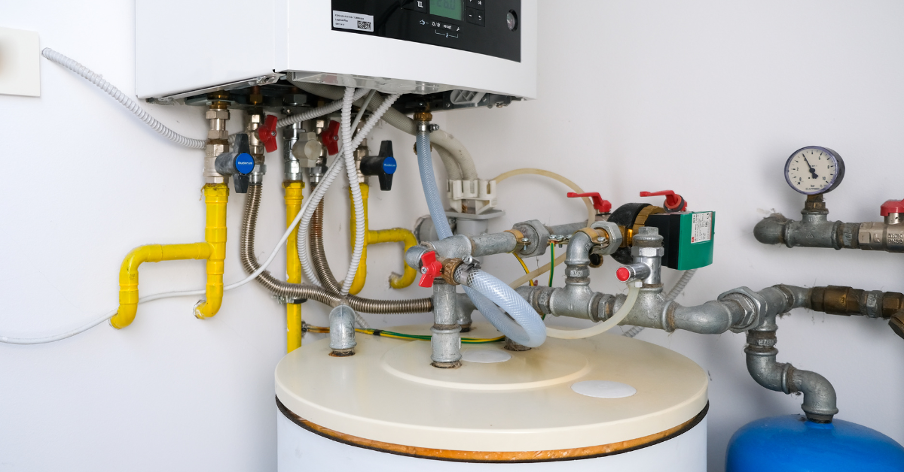
Gas hot water is efficient and popular across Perth, but gas is not something to take chances with.
Never attempt gas repairs yourself. In Western Australia, gas fitting work must be carried out by a licensed gas fitter. It’s the law, and it exists for good reason.
Stop and act straight away if you notice any of these warning signs:
- A smell of gas, often described as rotten eggs.
- A pilot light or burner flame that is yellow or orange rather than a crisp blue.
- Soot, scorching, or black marks around the unit.
- Headaches, nausea, or dizziness when the appliance is running, which can point to carbon monoxide.
If you smell gas, turn off the supply at the meter if it is safe to do so, avoid any flames or electrical switches, open windows, and get everyone outside. Then call your gas provider’s emergency line.
Carbon monoxide is a particular danger with faulty gas appliances because it is invisible and has no smell. Building and Energy, WA’s gas safety regulator, recommends having gas appliances serviced by a licensed gas fitter at least every two years, or annually once they are more than ten years old.
If you ever suspect a gas fault, our licensed gas plumbers in Perth can inspect the unit and make it safe. For more on why correct fitting matters, see our guide to professional gas hot water system installation.
When no hot water means it’s time for a new system
Sometimes no hot water isn’t a repair job at all. It’s your system telling you it has reached the end of the road.
A few signs point towards replacement rather than repair:
- The system is more than 10 to 12 years old.
- You are getting rusty or discoloured hot water, which suggests internal corrosion.
- There are pools of water or damp patches around the base of the tank.
- Repairs are becoming frequent, and the cost is creeping towards the price of a new unit.
When replacement is the sensible choice, a fresh hot water system installation is also a chance to improve. Modern systems are more efficient, and you may be able to move to a continuous flow, heat pump, or solar-boosted unit that trims running costs.
Whatever you choose, hot water system installation is regulated work that should be done by a licensed plumber or gas fitter. Correct sizing, a compliant tempering valve, and proper connections all matter for safety and performance.
Australian Standards require hot water to be delivered to bathrooms at no more than 50 degrees Celsius to prevent scalding, and a licensed installer makes sure your system meets that rule. Alkimos Plumbing and Gas can help you weigh up repair against replacement and pick the right system for your home or business.
When to DIY and when to call a professional
Knowing your limits saves money and keeps everyone safe. Here’s an honest breakdown.
Safe to try yourself:
- Checking whether the issue affects one tap or the whole home.
- Resetting a tripped safety switch or circuit breaker once.
- Relighting a gas pilot by following the manufacturer’s instructions.
- Confirming the gas supply is on and the cold water inlet valve is open.
Leave it to a licensed professional:
- Any gas repair, adjustment, or relighting you are unsure about.
- Replacing heating elements, thermostats, valves, or the tank.
- Anything involving electrical wiring, or a safety switch that keeps tripping.
- Rusty water, leaks, or a burning smell.
The line is simple: quick checks and resets are fine, but repairs inside the unit are not. In WA, plumbing and gas work is licensed for a reason, and using an unlicensed person can void warranties and insurance. Industry bodies like the Master Plumbers and Gasfitters Association of WA uphold exactly these standards. If a fault leaves you without hot water outside business hours, our 24-hour emergency plumbing service in Perth can help, and our broader plumbing services in Perth cover everyday repairs and upkeep.
Frequently asked questions
Why do I suddenly have no hot water when nothing has changed?
The most common causes are a tripped safety switch on an electric system or a pilot light that has gone out on a gas system. Check those first. If everything looks normal and the water is still cold, an internal part such as an element, thermostat, or valve may have failed.
Is it safe to relight my gas hot water pilot myself?
Usually yes, if you follow the steps in your owner’s manual exactly and feel confident doing so. If the pilot won’t stay lit, you smell gas, or you are unsure at any point, stop and call a licensed gas fitter.
How long should a hot water system last in Perth?
Most storage systems last around 8 to 12 years. Perth’s hard water can shorten this if the system isn’t maintained, so regular servicing genuinely pays off.
My water is warm but not hot. What does that mean?
Lukewarm water often points to a partly failed heating element, a thermostat issue, or a tempering valve problem. It can also happen when demand outstrips a system that is too small. A technician can identify which it is.
Why is my hot water rusty or discoloured?
Rusty hot water usually signals corrosion inside the tank. This is often a sign the system is nearing the end of its life and should be assessed for replacement.
Who do I call for no hot water after hours?
For an after-hours failure, a 24-hour emergency plumber can restore your hot water or make the situation safe. Alkimos Plumbing and Gas offers emergency support across the Perth area.
Get fast help when you have no hot water in Perth
Losing your hot water is annoying, but it’s rarely a mystery. Start with the simple checks: is it one tap or the whole house, has a safety switch tripped, is the pilot lit, and is the water supply on. Many problems are solved right there.
For anything beyond those basics, especially gas faults, rusty water, or repeated failures, it’s time to bring in a licensed professional. Doing it properly protects your safety, your warranty, and your hip pocket.
Martin Lockheart has spent 23 years in the trade and founded Alkimos Plumbing and Gas 11 years ago.
His advice on hot water is refreshingly simple:
“Most calls about no hot water come down to just a few common causes, and plenty can be checked safely at home before we even arrive. Where I always tell people to stop is gas: never guess with it. If something is not right, get a licensed professional in and have it sorted properly the first time.”
If you have no hot water anywhere in Perth, Alkimos Plumbing and Gas is here to help. Our licensed team handles everything from quick repairs to full system replacements for both homes and businesses. Get in touch today and we’ll get your hot water flowing again.