
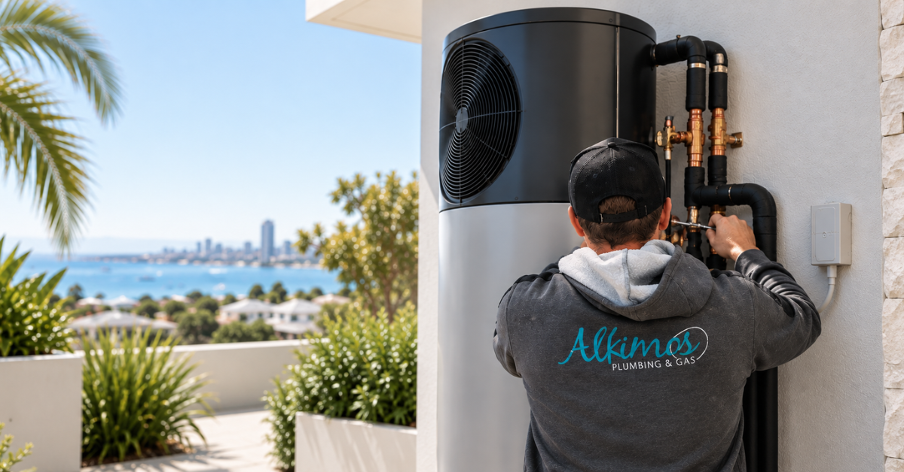
Your hot water quietly accounts for one of the biggest slices of your power bill. In fact, water heating makes up around a third of the energy used in an average Perth home. So when your old tank fails, the system you choose matters.
A heat pump hot water system is the option most Perth households now ask about, because it can cut hot water running costs sharply. But the technology feels mysterious, and the rebate rules are easy to get wrong.
This guide explains, in plain terms, how a heat pump heats your water, what rebates actually apply in Western Australia, roughly what you might pay, and the warning signs that it is time to act. You will finish knowing enough to make a confident, informed choice.
Why your old hot water system runs up the bill
Most Perth homes still run on electric storage or gas hot water. Both work, but both have a catch.
An electric storage tank heats water with a resistive element, a bit like a giant kettle. Every unit of electricity buys you exactly one unit of heat, which makes it the cheapest system to buy and often the most expensive to run.
Gas is usually cheaper to run than old electric, but WA gas prices have been climbing, and a gas system still burns fuel every time you shower.
Perth’s situation makes this worse than you might expect. Around half of local homes rely on electric storage units, and heating water accounts for roughly a third of household energy use across WA. That is a lot of money going up the flue or out the element.
The good news is that Perth’s mild, sunny climate is close to ideal for the one technology that sidesteps the problem. Warm air is free, and a heat pump is built to use it.
How heat pump hot water actually works
A heat pump does not make heat. It moves heat. Think of your fridge running in reverse: instead of pulling warmth out of the food compartment, it pulls warmth out of the surrounding air and pushes it into your water tank.
Because it is moving existing heat rather than generating it from scratch, it does far more with each unit of power. Most systems deliver three to four units of heat for every one unit of electricity they draw. Here is the cycle, step by step.
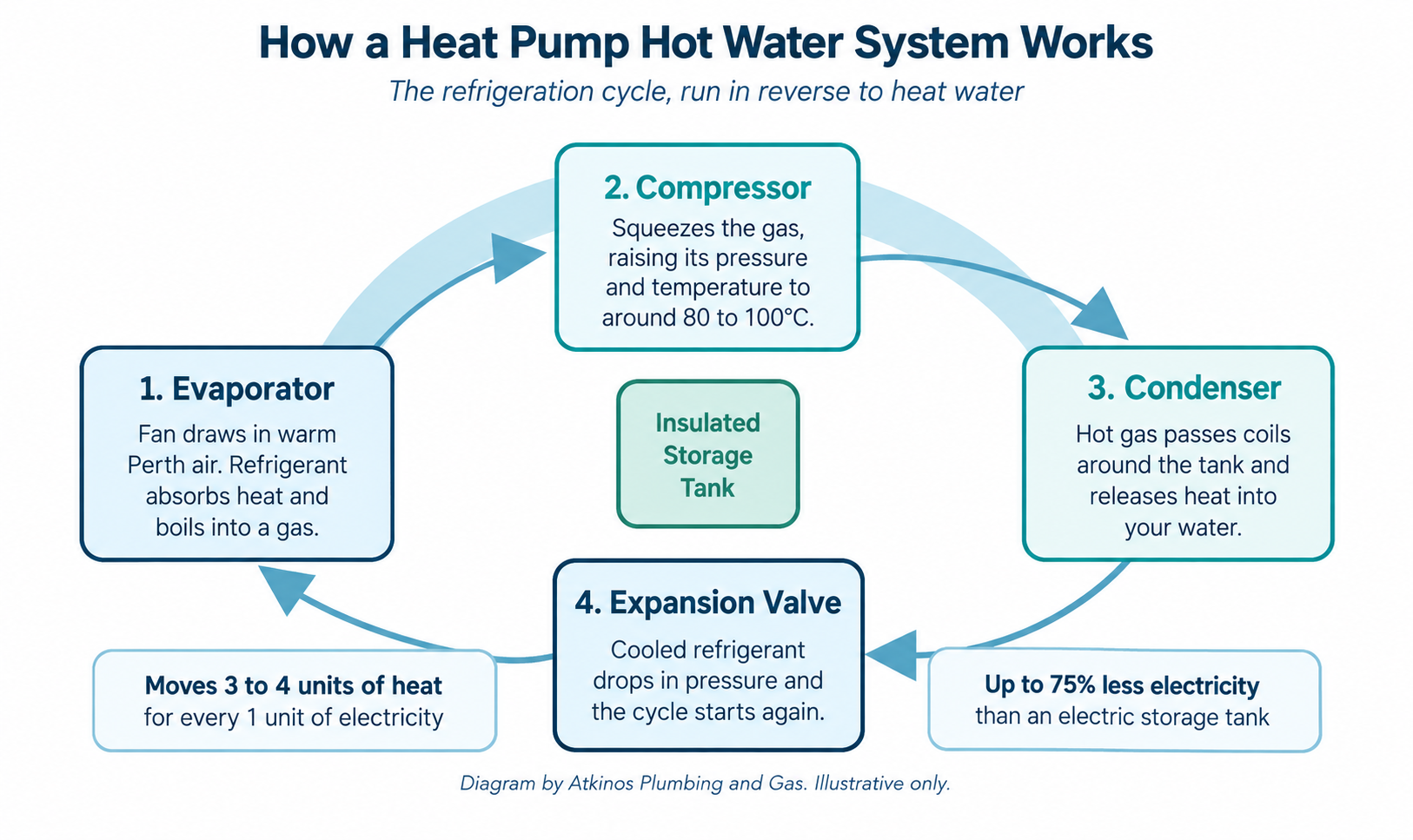
The four-stage cycle that heats your water
Every heat pump hot water unit runs the same loop:
- Evaporator: A fan draws in warm outside air. A refrigerant with a very low boiling point absorbs that warmth and turns into a gas.
- Compressor: This squeezes the gas, which sharply raises its pressure and temperature, often to 80 to 100°C.
- Condenser: The hot gas passes through coils around the tank and releases its heat into your water.
- Expansion valve: The cooled refrigerant drops in pressure, turns back to a liquid, and the cycle begins again.
The compressor is the only part using meaningful power, and it is only compressing gas, not creating heat. That is the whole efficiency secret.
Integrated or split: which layout fits your home
You will be offered two layouts. Both use the same cycle.
- Integrated: The tank and compressor sit in one unit, usually outside. Simpler to install and often cheaper.
- Split: The compressor and fan are separate from the tank, connected by refrigerant lines. This gives you more placement flexibility, and the tank can run more quietly indoors.
For most Perth homes, an integrated unit outdoors is the practical pick. The right choice depends on your space, noise tolerance and where the old system sits, which is where a licensed plumber’s site visit pays off. Alkimos Plumbing and Gas can size and recommend a system as part of our hot water system installation service in Perth.
Which Perth rebates actually apply
This is where people lose money by getting confused. There is currently no dedicated Western Australian state rebate for heat pump hot water. Schemes you may have read about in Victoria or New South Wales are state programs that do not reach WA.
What does apply here is federal: the Small-scale Renewable Energy Scheme, run by the Clean Energy Regulator. When you install an eligible system, it earns Small-scale Technology Certificates (STCs) based on its capacity, your location and the year. Your installer usually claims these for you and takes the value straight off your quote as an upfront discount.
One timing point matters. The scheme uses a deeming period that shrinks by one year every January until it ends in 2030. The sooner you install, the more certificates your system earns, so the discount is slightly larger the earlier you act.
To qualify, your chosen model must be on the Clean Energy Regulator’s approved register and installed exactly as listed by a licensed professional. A good installer handles this paperwork for you.
“The biggest mistake we see is people chasing a WA state rebate that no longer exists, or delaying a year and quietly losing part of their federal discount. Get the right system sized properly, install it while the certificates are still generous, and the numbers look after themselves.” – Martin Lockheart, Director, Alkimos Plumbing and Gas (23 years in the industry)
What a heat pump hot water system costs in Perth
Treat all figures as general ranges, since your final price depends on tank size, site access and your existing plumbing. A written quote is the only accurate number.
- A supplied and installed heat pump hot water system in Perth commonly falls between $3,000 and $6,000 before rebates.
- The federal STC discount typically takes several hundred to well over a thousand dollars off that, applied at the point of sale.
- Running costs can drop by up to 75 percent compared with an old electric storage tank, which is where the long-term savings sit.
Tank size is the biggest lever on price, so paying for the right capacity, rather than the biggest, is the smart move for most families.
Signs your hot water system needs replacing
Do not wait for a cold shower and a flooded laundry. These signs mean you should call a licensed plumber sooner rather than later:
- Water runs lukewarm or runs out faster than it used to.
- Rusty, discoloured or metallic-smelling hot water, which often points to a corroding tank.
- Puddles, damp patches or rust around the base of the unit.
- Banging, rumbling or hissing noises during heating.
- Your system is 10 to 12 years old and repairs are adding up.
- A sudden jump in energy bills with no change in how much hot water you use.
A failing tank rarely recovers on its own. Acting early lets you plan an efficient upgrade calmly, rather than paying emergency rates when it finally gives out.
Why hot water installation needs a licensed plumber
Swapping a hot water system is not a DIY job. In WA, hot water and gas work must be carried out by a licensed plumber or gasfitter, both for your safety and to keep your warranty and rebate valid.
Here is what a proper installation from Alkimos Plumbing and Gas looks like:
- We size the system to your household, so you are not overpaying for capacity you never use.
- We confirm the model is on the approved register and handle the STC paperwork so the rebate comes off your price.
- We manage safe removal of the old unit and correct electrical, water and, where relevant, gas connections.
If you also run gas appliances, our licensed Perth gas plumber team can advise on the full setup. Managing rentals? Our property management plumbing services keep tenants in hot water with minimal fuss. And if your current system fails without warning, our after-hours emergency triage guide walks you through what to do first.
Choosing the right system for your Perth home
A heat pump hot water system suits Perth’s climate, slashes running costs, and still qualifies for the federal STC discount, even though no WA state rebate applies. Size it correctly, install it with a licensed plumber, and act before the certificates shrink further.
Thinking about an upgrade or facing a failing tank? Talk to Alkimos Plumbing and Gas about the best hot water system for your home. Call (08) 6118 6107 for honest advice and a written quote across Perth.