
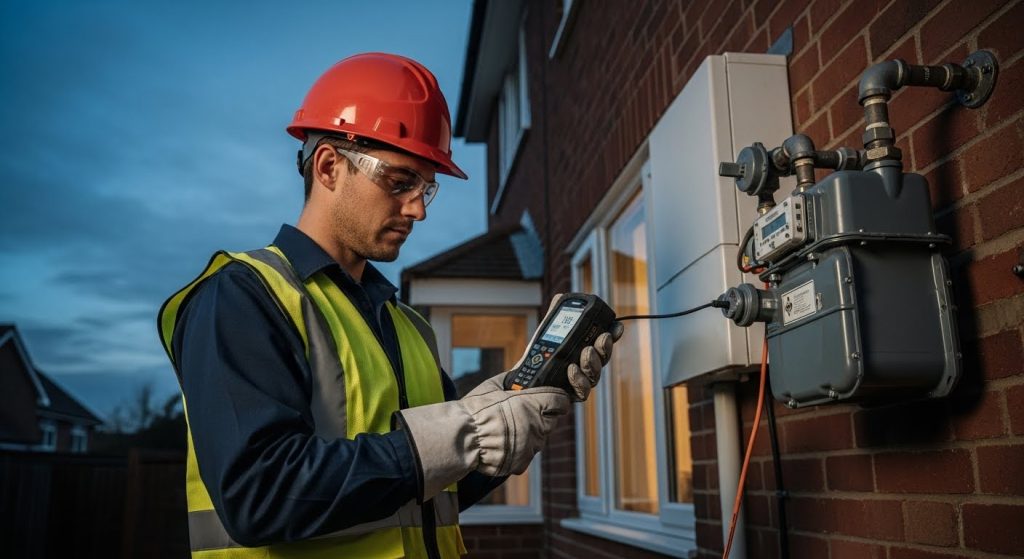
Gas leak repair is a specialised field found at the intersection of engineering and safety laws. In this profession, ‘good enough’ is never an option because every detail must be perfect to manage such a volatile utility safely.
Handling these repairs requires a mix of deep technical knowledge and forensic accuracy to ensure a property remains secure. In the following sections, we will explore how modern materials have changed pipe installations, the high-tech sensors used to find hidden leaks, and why following official safety standards is the only way to truly protect a home or business.
The Rules Behind the Repairs
The foundation of any safe gas system is built on a specific set of technical standards known as the AS/NZS 5601 series, which defines the complete requirements for system design and installation and system maintenance.
The documents function as legally binding blueprints that establish the requirements for all system design and installation and maintenance work. The most recent version focuses on performance-based design, which evaluates actual system operation under real-world conditions instead of following traditional assessment procedures.
State-based laws take these technical standards and turn them into mandatory requirements. Different regions rely on specific legislation to ensure every practitioner follows the same protocol. The legal framework guarantees that all repairs receive the same careful treatment regardless of whether they occurred in a residential property or an industrial facility.
Standard vs. Complex Installations
Regulators generally divide gas work into two main categories based on the level of risk involved:
- Standard Gas Installations: These typically involve domestic settings, such as home heaters, hot water units, and kitchen cooktops.
- Complex Gas Installations: These involve high-consumption industrial appliances or specialised commercial processes. Because the volume of gas is much higher; these systems require a higher tier of oversight and specialised permits to manage.
The People Behind the Safety Rules
Government agencies execute worker accreditation, which they monitor through their auditing process to ensure that organisations operate according to established regulations. The organisations function as “technical police” because they ensure that all industry standards remain intact throughout every jurisdiction.
|
State |
Primary Regulatory Authority |
Core Legislation |
|
VIC |
Victorian Building Authority (VBA) |
Gas Safety Act 1997 |
|
NSW |
Building Commission NSW |
Gas & Electricity (Consumer Safety) Act 2017 |
|
QLD |
QBCC / Resources Safety & Health |
Petroleum and Gas Act 2004 |
|
WA |
Building and Energy (DEMIRS) |
Gas Standards Act 1972 |
Recent updates to these rules have introduced critical changes, such as the requirement for a one-metre metallic buffer between non-metallic pipes and appliances. These amendments are not just administrative. They are proactive steps taken to prevent fire risks and ensure that modern housing remains safe as technology evolves.
The Training Behind the Licence
Professional gas leak repair is considered a high-risk trade, which means the journey to becoming a qualified practitioner is long and demanding. Unlike more general trades, gasfitting requires a combination of formal education and thousands of hours of supervised field experience. This usually begins with a multi-year apprenticeship where an individual learns the basics of consumer piping, appliance installation, and commissioning.
A critical part of this journey is the distinction between registration and licensing. In many jurisdictions, a registered practitioner is qualified to work under supervision, but they cannot work independently on complex systems or issue legal compliance certificates.
Reaching the level of a fully licensed professional requires additional years of documented experience and passing rigors exams that test both theoretical knowledge and practical skills, such as precise pressure testing.
Specialised Training for High-Risk Repairs
The diverse nature of modern gas systems requires operators to obtain specialised licences beyond standard licensing requirements. Practitioners pursue specialised endorsements to demonstrate their ability to perform work in specific environmental conditions that require specialised skills.
- Type A Appliance Servicing: This is mandatory for working on domestic heaters and hot water units. The problem has gained importance because open-flued appliances from previous years create dangerous conditions, which allow carbon monoxide to escape their systems.
- Type B Gasfitting: This covers large-scale industrial and commercial systems, such as boilers and furnaces. Technicians in this field must have advanced knowledge of combustion chemistry and electronic control systems.
- LPG Specialised Work: Working with liquefied petroleum gas requires its own set of rules because LPG is stored under pressure and behaves differently from natural gas. This rule applies especially to areas that include regional locations, marine vessels, and caravans.
Always Learning to Keep You Safe
The training process develops a cultural environment that teaches practitioners to handle leaks through automatic behaviour rather than understanding fluid dynamics and gas chemical properties. The technicians possess advanced knowledge that enables them to identify possible equipment malfunctions before they occur. The organisation maintains one objective, which applies to all situations: they deliver silent yet outstanding work that ensures utility networks remain secure and operational for all users.
Using Smart Tools to Find Invisible Problems
Locating a gas leak is a specialised form of detective work. While many people rely on their sense of smell, a professional uses a systematic approach to find the exact source of the problem. The goal is to be as precise as possible, ensuring the environment is safe without having to tear up floors or walls unnecessarily.
Precision Pressure Tests
The first step is usually a manometric pressure test. By isolating the gas system and pressurising the pipes, a technician can use a digital gauge to watch for even the slightest drop in pressure. If that gauge moves at all, it confirms there is a breach somewhere in the line. This simple but vital test tells the professional exactly how serious the leak is before they start searching for where.
High-Tech Sensors and Tools
When a leak is hidden behind a wall or deep underground, professionals bring in specialised gear to “see” and “hear” what humans can’t:
- Electronic Sniffers: These sensitive handheld tools can pick up tiny amounts of gas that a human nose would never notice.
- Ultrasonic Listening Gear: Escaping gas actually makes a high-pitched sound. These tools pick up those frequencies, allowing a technician to hear a leak through solid concrete or brick.
- Thermal and Acoustic Imaging: High-end cameras can now visualise gas leaks by mapping sound or detecting the slight temperature changes that happen when gas escapes into the air.
Using these tools is what defines professional excellence. It allows the problem to be found with surgical accuracy, saving the property owner from the mess and cost of “guessing” where the leak might be.
Conclusion
The ongoing dedication to gas safety requires advanced technological solutions that must comply with existing legal requirements. People can use energy throughout their daily activities because the “quiet excellence” system operates behind the walls without requiring their attention to complex engineering work. Organisations that select a professional team for their operations will achieve complete protection through sustainable solutions instead of opting for temporary measures.
The Alkimos Plumbing team uses their expertise and special equipment to provide safe and secure services that protect both residential and commercial properties. The only method to guarantee essential utility systems function safely and remain operational for extended periods is through our expertise in technical work and forensic research.